

Why Does My Insurance Company Care If Limbs, Brush and Weeds Are Touching My House?
If you have ever had a homeowners insurance inspection, you may have received a letter asking you to trim tree limbs, remove brush, or cut back weeds growing against your house.
And your first thought might be:
“Seriously? My insurance company cares about a few weeds?”
Actually, there is a reason.
Insurance companies are in the business of evaluating risk. When they see vegetation growing against a home, tree limbs hanging over a roof, or brush accumulating around the foundation, they aren’t necessarily concerned about how your yard looks. They’re concerned about what those conditions could eventually lead to.
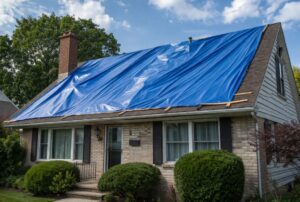
1. Tree Limbs Can Become Roof Problems
A tree branch hanging over your roof may look harmless on a calm, sunny day.
It looks very different when the next 60-mph windstorm comes through.
Branches can break and damage shingles, gutters, siding, windows, and other parts of the home. Larger limbs can cause significant structural damage.
Even branches that don’t fall can create problems. They can rub against roofing materials, drop leaves and debris onto the roof, and contribute to clogged gutters.
That’s why an insurance inspector may pay particular attention to trees and limbs close to the home. Insurers are looking for conditions that could increase the likelihood or severity of a future claim.
2. Vegetation Against the House Can Hold Moisture
Brush, weeds, vines, and other vegetation growing directly against siding or other exterior surfaces can trap moisture.
Over time, that moisture can contribute to deterioration, rot, mold, or insect problems.
Insurance generally isn’t designed to pay for deterioration that occurs gradually because of poor maintenance or normal wear and tear. In fact, insurers commonly consider the overall maintenance and condition of a home when deciding whether they want to insure or continue insuring it.
In other words, the insurance company isn’t necessarily worried about the weeds themselves.
It’s worried about what the weeds may be hiding or causing.
3. Gutters Are More Important Than They Look
Trees near a home produce leaves, twigs, seeds and other debris.
When that debris lands on the roof and ends up in the gutters, it can prevent water from draining properly.
That water has to go somewhere.
It can overflow against siding, windows, trim and foundations. In some situations, it can contribute to water intrusion or deterioration.
Keeping trees trimmed back and gutters clear is a relatively inexpensive way to reduce the potential for much more expensive problems.
4. Vegetation Can Increase Fire Risk
This one may seem more relevant to California or the western United States, but the basic principle applies everywhere:
Fire needs fuel.
Dry grass, dead brush, leaves, branches and other combustible material immediately around a home can provide fuel for a fire to reach the structure.
Insurers in wildfire-prone areas have become particularly focused on vegetation and “defensible space” around homes. But even outside major wildfire zones, reducing combustible material immediately around a structure is simply good risk management.
5. Insurance Companies May Be Looking at Your Property From the Air
Here’s something many homeowners don’t realize.
An insurance company doesn’t necessarily have to send someone walking around your property to see these problems.
Many insurers and third-party inspection companies now use aerial photography, satellite imagery and other technology to evaluate properties. These images can identify things such as roof conditions, overhanging trees, vegetation and other apparent maintenance concerns.
That creates an important lesson:
Your insurance company may be seeing your house differently than you do.
You see the beautiful mature tree in your backyard.
An insurance inspector may see a large tree with branches extending over the roof.
You see a little brush along the side of the house.
An insurer may see vegetation touching the structure.
Neither perspective is necessarily wrong. They’re simply looking at the property from different angles.
6. This Doesn’t Mean Your Insurance Company Wants Your Yard Bare
There is an important distinction here.
Insurance companies aren’t generally asking homeowners to eliminate every tree, bush and flower around their property.
Trees and landscaping are part of what makes a house a home.
The goal is to manage the exposure.
Trim limbs that are hanging over or touching the roof.
Keep vegetation from growing directly against the siding.
Remove dead branches and accumulated brush.
Keep gutters and roof surfaces clear of excessive debris.
And don’t allow landscaping to create an obvious pathway for water, pests or fire to reach the structure.
The Bigger Picture: Insurance Is About Preventing Claims, Not Just Paying Them
A homeowners insurance policy is there when something unexpected happens.
But insurance companies also spend a tremendous amount of time trying to determine how likely that unexpected event is to happen in the first place.
That’s why they care about things that might seem insignificant to a homeowner.
A branch touching the roof today could become a roof claim during the next windstorm.
A clogged gutter could contribute to water damage.
Brush against the house could trap moisture or provide fuel for a fire.
Overgrown vegetation can also be a visible indication that other maintenance issues may exist.
So the next time your insurance company asks you to trim those branches, clean up the brush or cut back the weeds, don’t necessarily think of it as the insurance company being picky.
Think of it as a reminder to protect one of your largest investments.
And honestly, that’s good advice whether your insurance company asks for it or not.