

Why Roof Insurance Claims Have Changed
Understanding Older Asphalt Roof Coverage in Today’s Insurance Market
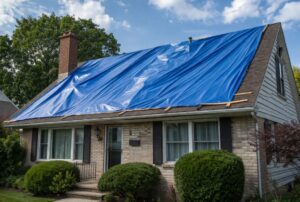
If you’ve reviewed your homeowners policy recently—or had a roof claim—you may have noticed something frustrating:
Your insurance isn’t covering your roof the way you expected.
This is not a one-off change, and it is not specific to your policy. This is the insurance market today.
This Is an Industry-Wide Shift
One of the most common questions we hear is why a specific insurance company is changing coverage.
The reality is that this is not isolated to one carrier. It is happening across the entire insurance industry.
Most companies today are limiting replacement cost coverage on older roofs, applying actual cash value settlements to wind and hail losses, or setting strict guidelines on roof age. In some cases, homes are not eligible for coverage at all if the roof is beyond a certain point in its lifespan.
In many situations, alternative insurance options are even more restrictive, not less.
This Has Been Communicated—But Often Overlooked
Another important piece of this conversation is timing.
These changes did not happen overnight. Insurance companies and agents have been communicating adjustments to roof coverage for several years through renewal notices, policy updates, and underwriting changes.
The challenge is that these details are easy to miss. Most homeowners do not focus on coverage language unless something goes wrong.
As a result, many people are first realizing how their policy works at the time of a claim, when expectations and reality do not line up.
What Caused the Change
The driving force behind these changes is sustained underwriting losses, largely tied to roof claims.
While major weather events in coastal areas often dominate the news, the more significant issue for insurers in the Midwest is the frequency of smaller, widespread losses. Windstorms and hail events occur regularly and impact large geographic areas at once.
These are not rare, catastrophic events. They are consistent, repeat occurrences that generate a high volume of claims year after year.
At the same time, the cost to replace a roof has increased significantly. When you combine frequent claims with rising material and labor costs, the result is a level of loss that is not sustainable under older coverage models.
Why Older Roofs Are Treated Differently
Insurance is designed to cover sudden and accidental damage, not ongoing wear and tear.
As asphalt shingle roofs age, their condition naturally declines due to exposure to weather and time. This makes them more susceptible to damage during a storm.
When an older roof is replaced after a loss, the insurance company is often paying to install a brand-new roof in place of one that was already well into its lifespan. From an underwriting standpoint, that creates an upgrade rather than a simple repair.
This concept, often referred to as betterment, is a key reason why coverage changes have been implemented.
How Policies Are Responding
In today’s market, many policies reflect this shift by changing how roof claims are settled.
Older roofs are frequently covered on an actual cash value basis, meaning depreciation is applied based on age and condition. In some cases, this approach applies specifically to wind and hail losses, even if the rest of the home is insured at replacement cost.
Carriers are also enforcing stricter underwriting guidelines related to roof age, sometimes requiring updates or declining risks altogether.
What This Means for Homeowners
For homeowners, this means expectations around roof claims need to be adjusted.
If your roof is older, it is likely that a claim will involve some level of out-of-pocket cost. Full replacement coverage may no longer apply, and the difference between the claim payment and the actual cost to replace the roof can be significant.
It is also important to understand that switching insurance companies may not solve the issue, as most carriers are operating under similar guidelines.
A Practical Example
Consider a roof with a replacement cost of $15,000 that is 15 years old.
Under an actual cash value settlement, depreciation is applied to reflect the roof’s age and condition. The resulting claim payment may only cover a portion of the total replacement cost, and the deductible still applies.
This gap between what is paid and what it costs to replace the roof is what many homeowners are experiencing today.
Why This Trend Is Likely to Continue
There is little indication that this trend will reverse in the near future.
Storm frequency remains consistent, particularly in the Midwest. Roofing costs have not decreased, and claim severity continues to rise. As a result, insurance companies are continuing to limit their exposure on older roofs and shift more responsibility to property owners.
The Bottom Line
In the past, it was common for roofs to be insured at full replacement cost regardless of age.
That is no longer the standard in today’s insurance market.
This is not about one company or one policy. It is a broad industry shift that affects nearly all homeowners with older asphalt shingle roofs.
What You Should Do
The most important step is understanding how your specific policy responds before a claim occurs.
Review your coverage, know the age of your roof, and be prepared for the possibility of out-of-pocket costs if a loss happens.
Having that clarity ahead of time can prevent significant surprises later.