

Winter Safety Tips for Driving in the Snow
Winter storms often mean heavy snow, strong winds and record-low temperatures. The resulting road conditions can cause car accidents, injuries and fatalities. In fact, the Federal Highway Administration (FHWA) estimates that 24% of weather-related crashes each year occur on snowy or icy pavement. [1] If you must be on the road during severe winter weather, consider these tips for driving in the snow.
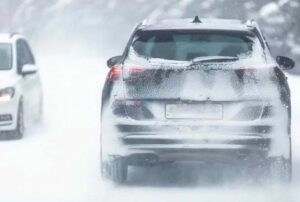
Clear the snow from your vehicle
If you can’t see out all vehicle windows, you can’t drive safely. Remove snow and ice from all windows and side mirrors, as well as from headlights and taillights. Snow on your roof can shift and block your view two, so brushing it off can help keep you safe.
De-ice your windshield
Keep your windshield washer tank full, carry an ice scraper in your vehicle and be sure the wiper blades are in good condition.
Install snow tires
Compared to all-weather tires, snow or winter tires have treads designed to maintain a better grip on icy and snowy surfaces. Experts recommend installing winter tires on all 4 wheels. [2]
Maintain a safe following distance
Ensure you follow about 6 seconds behind the vehicle in front of you to give yourself enough time to stop safely and avoid a collision. [3]
Learn how to control a skid
If you find yourself in a skid, take your foot off the accelerator and steer in the direction of the skid until you regain control. Then, you can straighten the wheel and gently steer in the direction you’d like to go. [4][5]
Avoid using cruise control
You need to be alert and in control at all times, so save cruise control for normal road conditions. In general, avoid using cruise control any time the road surface is less than ideal. [4]
Reduce your speed and brake carefully
Slow down. It can take much longer to stop in snowy or icy conditions. When you need to brake, ease your foot gently but firmly onto the pedal with the goal of gradually slowing down. Spiking the brakes quickly can cause you to lose control of your vehicle.
Use your anti-lock brakes (ABS) properly
ABS can be effective, but the feeling under your foot and the odd sound they can make can be jarring. Don’t let this startle you; just maintain firm, constant pressure. Avoid taking your foot off the brake. [3a]
Avoid certain roads
If possible, stay off the roads until they’ve been plowed and de-iced. On roads that have yet to be cleared, slow down, turn off your cruise control, and avoid sudden braking or accelerating and unnecessary stops. It’s critical to know the snow emergency levels in your area; depending on the severity of the emergency level, law enforcement may ticket you for being on the road.
Be mindful of snowplows
During severe winter weather, help ensure everyone’s safety by giving snowplows plenty of room to work. If you’re driving near a plow, leave as much distance as possible, and keep in mind that the snow coming off the plow could hit your windshield and obstruct your view of the road. Also, keep in mind that the plow driver’s visibility could be limited by snow and the plow itself. [4]
Pay attention to black ice
The term “black ice” refers to roads that appear to be wet but are actually covered in ice. Black ice can form when temperatures warm up enough for ice and snow to thaw but drop again and allow it to refreeze. To help know whether black ice could be a risk, keep an eye on your car’s outside temperature gauge when conditions are close to freezing. [4] If you encounter a section of pavement that seems to be wet even though areas around it are dry, it could be black ice; slow down and proceed with caution or avoid those areas if possible. [6]
In snow, what’s the best gear to drive in?
When you’re on snow or ice, keep your speed down, and consider driving in lower gear, where and when appropriate, which will give you more power and traction while limiting your speed. [7]
Get auto insurance for additional protection
Driving in snow can increase the chances of an accident, so prepare yourself by remembering these safety tips when you get on the road.
For added peace of mind, find out how to winterize your car in preparation for the cold season. Learn more about protecting your car in all seasons with auto insurance.